


Skills Atrophy Slowly, Then All at Once
There is a pattern emerging in organizations that have moved fast with AI-assisted development. The features ship. The tests pass. But when something breaks in an unexpected way, nobody can explain it. When a new requirement arrives that should be straightforward, it isn't. The engineers who were writing fast no longer fully understand what they wrote.
This is not a surprise. Understanding comes from working through problems, forming mental models, and encountering failure. AI tools short-circuit that process. The code appears, it works, and no one needed to struggle to produce it. The productivity gains are real.
Technical skills do not disappear overnight. They atrophy gradually, usually unnoticed until the moment you actually need them: a production incident nobody can diagnose, an architectural decision nobody has the depth to evaluate, a new engineer who can ship code but cannot explain why it works.
Training does not substitute for experience. But it builds and reinforces the mental models that experience deepens over time. That is what our programs are designed to do.
Technical skills aren't less important because AI can write code. They're more important, because AI makes it possible to build complex systems without understanding them.
Amanda Adams, CEO, VergeOps
Why Training Matters More Than Ever
AI is changing technology teams and organizations are losing their handle on what AI is creating. Training is more important than ever.
Read the articleHow We Train
Our programs focus on understanding, not just output. Every engagement is built around hands-on application and tailored to what your team needs to actually do.
Expert-Led Instruction
Learn from practitioners who have built and operated these systems at scale inside real organizations. Our instructors bring direct experience, not just curriculum knowledge, so they can answer the questions that come up when theory meets reality.
Immersive Hands-On Labs
The curriculum is built around doing, not watching. Labs are designed to mirror the scenarios your teams will actually face, so the skills they build are immediately applicable. Participants leave with practical experience, not just notes.
Customized Curriculum
We tailor content, pacing, and examples to your team's existing skill level and your specific technology stack. A team doing their first Kubernetes deployment needs something different from a team debugging production cluster behavior. We build the right program for where you are.
Post-Training Coaching
As consultants working on real-world problems, VergeOps can dive in and help your team implement new learnings on your systems. This dramatically reinforces what your team has learned and expands on it.
What We Teach
Our catalog spans the core disciplines of modern software engineering and architecture. We deliver courses as intensive workshops, multi-day programs, or ongoing learning tracks. The topic areas below cover our primary offerings. Contact us to see the full catalog and discuss what your team needs.
Containers & Kubernetes
Fundamentals through advanced operations, cloud-managed clusters, service-mesh, observability, and production deployment patterns.
Cloud Architecture
Building resilient, scalable applications in the cloud. Cloud-native design principles and cost management.
AI & Machine Learning
Practical AI integration, LLM-powered application development, ML fundamentals, and responsible AI practices. AI-assisted systems development.
DevSecOps and Platform Engineering
Integrating security into the delivery pipeline, automated scanning, compliance automation, and secure-by-default practices. Building developer self-service systems.
Enterprise Architecture
Architectural thinking, governance frameworks, domain modeling, and aligning technical decisions to business strategy.
Microservices
Service decomposition, inter-service communication, data ownership, and patterns for managing distributed complexity.
Event-Driven Architecture
Event sourcing, CQRS, messaging systems, and designing systems that decouple producers from consumers at scale.
QA & Test Automation
Test strategy, framework design, shift-left practices, continuous testing, and performance engineering.
Application Architecture
Clean architecture, domain-driven design, API design, and patterns for building maintainable systems over time.
Kubernetes Fundamentals
An introductory course on Kubernetes built from a developer's point of view. Covers core container orchestration concepts and the broader ecosystem through a combination of instruction and hands-on labs. Students leave equipped to plan and execute their next Kubernetes deployment, regardless of cloud destination.
Core principles of microservices architecture and how breaking down monolithic applications into smaller, independent services improves scalability, resilience, and development agility.
Foundational Docker concepts including containerization, images, Dockerfiles, and registries. Establishes the container fundamentals that Kubernetes builds on.
Structure of a Kubernetes cluster, covering the control plane (API server, etcd, scheduler, controller manager) and worker node components, and how they collaborate to manage workloads.
Pods, ReplicaSets, Deployments, Services, DaemonSets, StatefulSets, and Jobs. ConfigMaps, Secrets, namespaces, and Ingress controllers.
Container requests and limits, Horizontal Pod Autoscaler, Vertical Pod Autoscaler, and Cluster Autoscaler for dynamically matching resource allocation to demand.
PersistentVolumes, PersistentVolumeClaims, and StorageClasses. Managing data persistence and availability for stateful applications.
Helm as the package manager for Kubernetes. Creating, deploying, and managing applications using Helm charts to streamline complex deployment workflows.
Integrating Kubernetes into CI/CD pipelines to automate build, test, and deployment workflows for faster, more reliable releases.
Running Kubernetes on AWS EKS, Azure AKS, and Google GKE. Managed service tradeoffs, cloud-native integrations, and cost optimization in production.
Apply all course concepts in a structured project using the RV Store demonstration application. Deploy, manage, scale, and troubleshoot a real application from end to end.
Advanced Kubernetes
Designed for teams who have Kubernetes fundamentals in place and are ready to go deeper. Includes a brief refresher on core concepts before moving into advanced scheduling, security, storage, and production operations patterns.
Internal components and their interactions, focused on advanced configuration and troubleshooting strategies for robust cluster management under production conditions.
Canary deployments and Blue/Green strategies for releasing new versions with minimal risk. Implementing these patterns correctly inside a live Kubernetes cluster.
Preventing resource contention at scale. Enforcing allocation policies across namespaces and pods for predictable cluster utilization.
Configuring HorizontalPodAutoscaler and ClusterAutoscaler for real-world load patterns. Tuning behavior to balance performance, cost, and stability.
Implementing and managing fine-grained access control. Defining roles and binding them to users or service accounts to secure cluster resources correctly.
Advanced pod composition techniques and design patterns. Using InitContainers to manage setup and dependency sequencing before main application containers start.
Persistent storage strategies for stateful applications. Data longevity, backup approaches, and disaster recovery patterns for production Kubernetes environments.
Advanced scheduling controls for determining where pods run in a cluster. Applying these for high availability, workload isolation, and hardware-specific placement.
Practical experience with AWS EKS and Azure AKS. Cloud-specific integrations, managed service tradeoffs, and production best practices for each platform.
A comprehensive project applying all advanced course concepts. Deploy, manage, and scale a complex application, working through the real challenges that surface in production.
How We Deliver
We build each program around your team's location, schedule, and existing commitments. Programs range from a focused two-day workshop to a comprehensive week-long course.
On-Site
Instructors come to your location anywhere on the globe. Best for larger teams, labs that use your own infrastructure, and situations where a shared in-person environment accelerates learning and team cohesion.
Virtual Instructor-Led
Live instruction delivered remotely. Participants get the same real-time interaction, Q&A, and hands-on labs as an in-person session, accessible from anywhere in the world.
Hybrid
A blend of in-person and virtual sessions, useful for distributed teams, multi-site organizations, or programs that combine an intensive on-site kickoff with follow-on virtual sessions.
Flexible Duration
We match program length to your schedule and the depth you need. A two-day intensive covers core concepts and immediate applicability. A five-day course adds the time to go deep, answer harder questions, and complete a more comprehensive hands-on project.
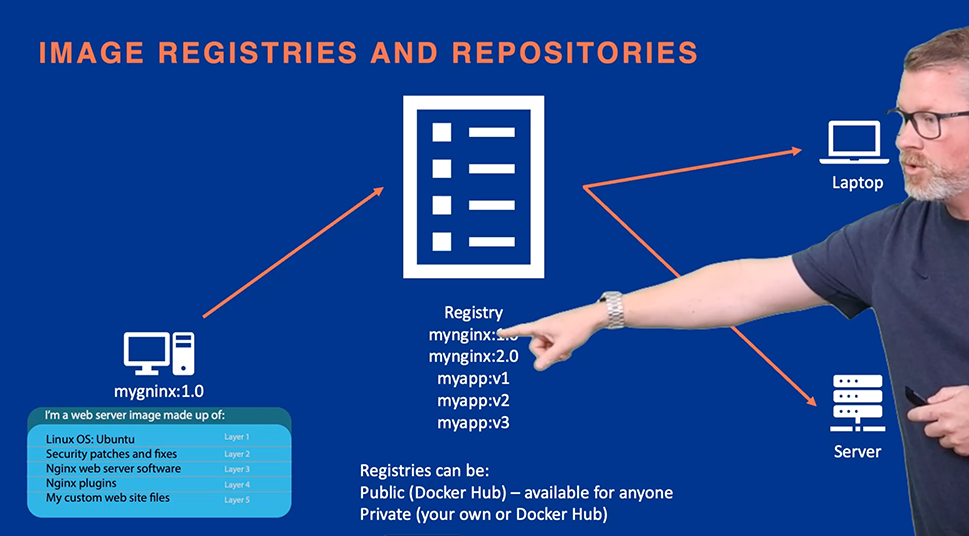
Screenshot from a virtual instructor-led course on Kubernetes (Click to expand)
A Track Record That Speaks for Itself
Our instructors have trained thousands of engineers at some of the largest and most demanding technology organizations in the world. This is not a sideline for us. Delivering technical training at enterprise scale is a core part of what VergeOps does, and it shows in the depth and practicality of our curriculum.
Sought after by the world's largest technology companies, we have delivered training to their engineers around the globe. Our instructors were chosen because they needed instructors who had actually built and operated the systems they were teaching, not instructors reading from a vendor's slide deck.
Build a Program for Your Team
Every team starts from a different place. Tell us what your organization is working on and where you see the gaps. We will put together a program that makes sense for where you are.
Get in Touch